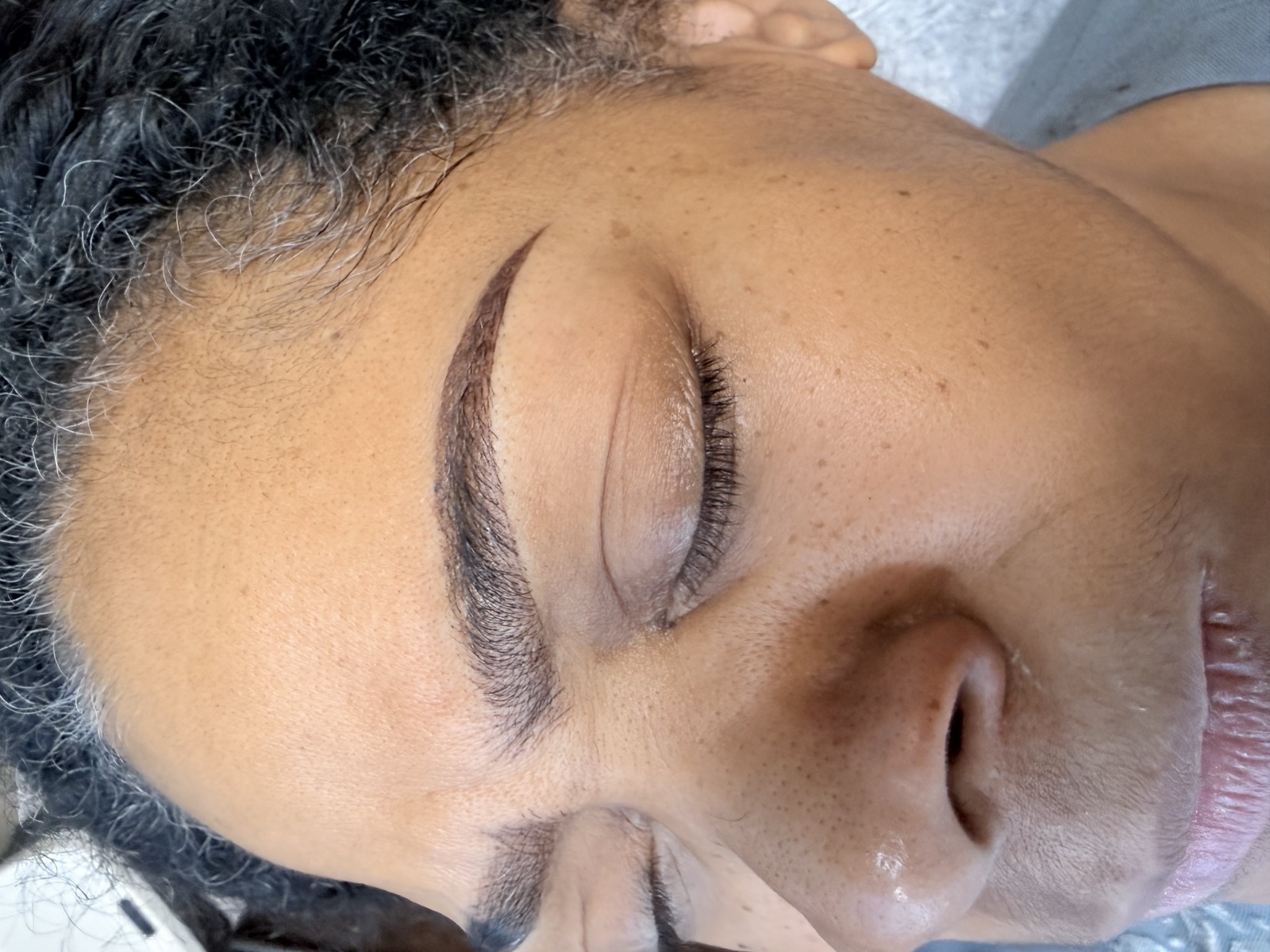
A note on scope: At I Am Beautiful by Mia I treat black and grey ink only, using a Q-switched Nd:YAG at 1064 nm, the wavelength that is safe on every skin tone. Colored ink I refer out. This guide covers removal generally; your removal consultation is free.
Why Old Brow PMU Goes Wrong
Permanent makeup ages, and not always gracefully. The most common regrets I see in my chair:
- Color shift — brows that healed or faded to gray, blue, or an orange-red instead of a natural brown.
- Wrong shape — too thick, too arched, too low, or drawn to a trend that doesn't suit your face.
- Patchy or blurred strokes — especially microblading on oilier skin, where crisp strokes blur over time.
- It just won't leave — faded enough to look bad, but still too visible to draw fresh brows over.
None of that means you're stuck with it for life. It means it's time to reset.
How Laser Removal of Brow Tattoos Works
A Q-switched laser breaks up the old pigment into tiny particles that your body clears over the weeks between sessions — the same technology used for body tattoos, but applied carefully to the delicate brow area. It's gradual and controlled, spaced about 6 to 8 weeks apart, so your skin heals fully between sessions.
Deeper and melanated skin can be treated safely with conservative, carefully matched settings — this is exactly the corrective work most artists won't touch, and where a rushed approach does real damage.
The Two-Part Journey: Remove, Then Redo Right
This is what makes correction different from just removal — you get to the finish line, not just a blank canvas:
- Lighten or remove the old work. Sometimes full removal isn't even necessary — often we just need to lighten the old pigment enough to design clean, new brows over it. How much depends on how dark and stubborn the existing ink is.
- Redesign and redo. Once your skin has healed, your brows are mapped fresh to your actual face — bone structure, eye spacing, your features today — and new nano or ombré brows are applied with a color matched to your skin and undertone.
You walk in living with brows you hate, and you walk out with brows that look like they were always meant to be yours.
What to Realistically Expect
Correction takes patience — it's a series, not a single visit, and rushing it is how skin gets damaged. Depending on your old work, you may need a few lightening sessions before the redo, spaced weeks apart. A consultation is where the real plan gets built: I look at how your old PMU healed, your skin type and tone, and whether you need full removal or just enough lightening to work over. Then you get an honest timeline — no overpromising.
